Course Description
In the era of evidence-based practice and policy in health care, evidence is required to determine how well an intervention works and whether it provides value for money. Evaluation is a tool for providing such information: measuring the success of the intervention in achieving its intended outcomes, determining its value, and providing guidance on how to improve interventions and service delivery to attain even greater success. Evaluation is an increasingly sought-after skill in today’s health workforce. In this course, students will learn the basics of evaluation in health, including what it is, why we do it, and how to design and conduct an effective evaluation that answers real-world questions. The course builds from principles to practical application, equipping students with the knowledge and skills to design and apply an integrated framework for evaluating health interventions. They will learn to plan evaluations, utilise different data sources, key processes for data collection and analysis, and economic evaluation. They will develop an evaluation toolkit and an evaluation mindset, providing a strong foundation for knowing what works in their career.
Learning Outcomes
- Explain major evaluation approaches and their limitations for a range of health interventions.
- Demonstrate self-awareness in relation to the knowledge and skills required for evaluation.
- Understand basic health economic concepts, as relevant to the context of the evaluation of a program.
- Identify data sources, data collection and data analysis processes commonly used in evaluation.
- Design a basic evaluation plan for a health intervention, demonstrating awareness of conceptual and practical issues.
Learning Experience
Topics
- Principles of Health Evaluation
- Planning an Evaluation
- Designing and Implementing an Evaluation
- Context in Health Evaluation
- Foundations of Health Economics
- Comparative Health Economic Analysis
- Social Return on Investment
- Data Sources in Evaluation
- Surveys for Primary Data Collection
- Interviews and Focus Groups for Primary Data Collection
- Interpreting Data in Evaluations
- Reflections on Evaluation in Practice
Development Team

Andrew Gardner
Course Author
Lead

Shona Crabb
Course Author
Contributer

David Tamblyn
Course Author
Contributer

Camille Schubert
Course Author
Contributer

Caroline Laurence
Course Author
Contributer
Danielle LeMieux
Learning Designer
Lead

Viviana Zuluaga
Digital Education Developer
Lead
Assessments
-
Quiz
Short Response Questions, Multiple Choice Questions
This task assesses learners understanding of the basic principles of health evaluation.
10%
-
Reflection
Learning Journal
Learners reflect on health evaluation contexts that are relevant to their experience, and on their own health evaluation skills. They are asked to share their reflections with peers to extend their understanding of health evaluation processes into deeper consideration of context and develop their professional evaluation skillset.
10%
-
Economic evaluation review
Short Response Questions
This task assesses learners understanding of the key health economics concepts and their ability to apply those concepts to sophisticated interpretation and critique
35%
-
Health program evaluation plan
Critical Analysis
Learners develop an evaluation plan for a selected health program, service or intervention to demonstrate their knowledge and skills in health evaluation planning and design. It involves real-world health contexts and requires them to apply relevant professional evaluation frameworks to produce evaluation plans and documents as would be expected of professional evaluators working in health.
45%
Snapshots


Learning Resources
-
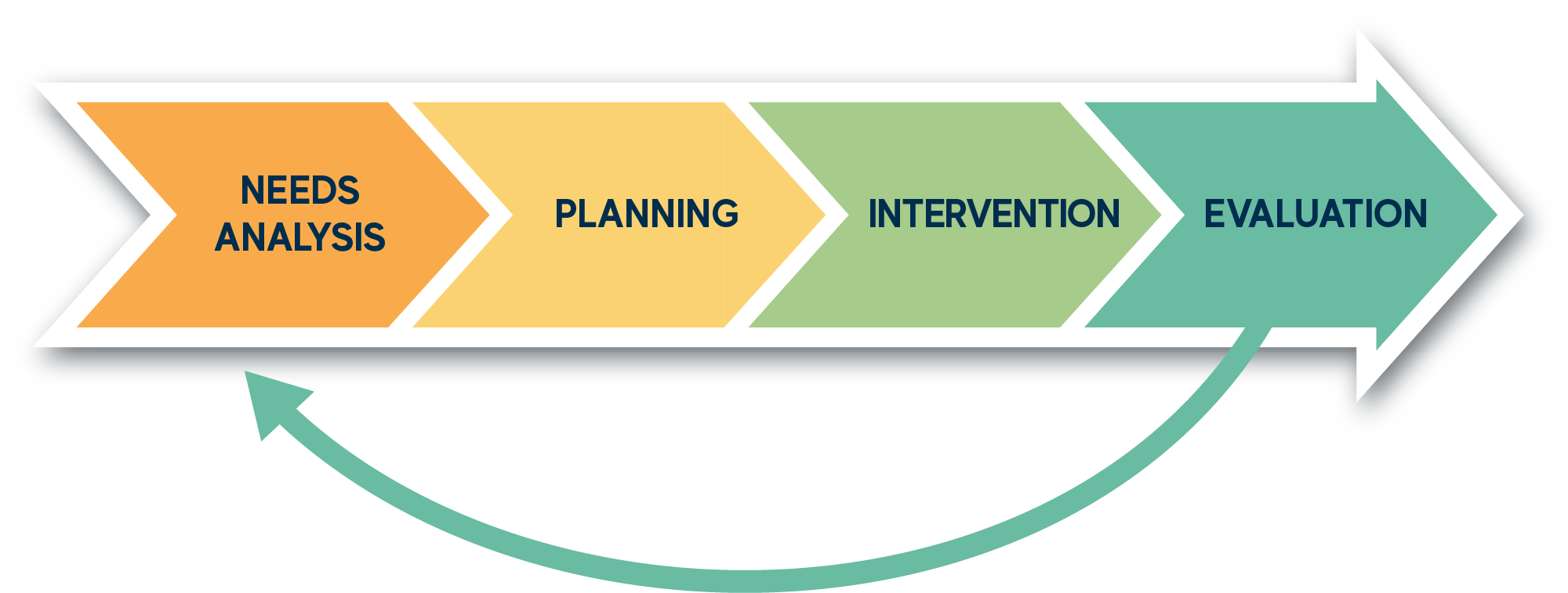
The role of evaluation within the planning cycle for a health intervention.
The simplified diagram shows the planning cycle for a health intervention, progressing through key steps of needs assessment, planning, intervention and evaluation. Importantly, the diagram shows that evaluation should feed (back) into needs assessment and planning, in an iterative process, rather than a linear one.
-
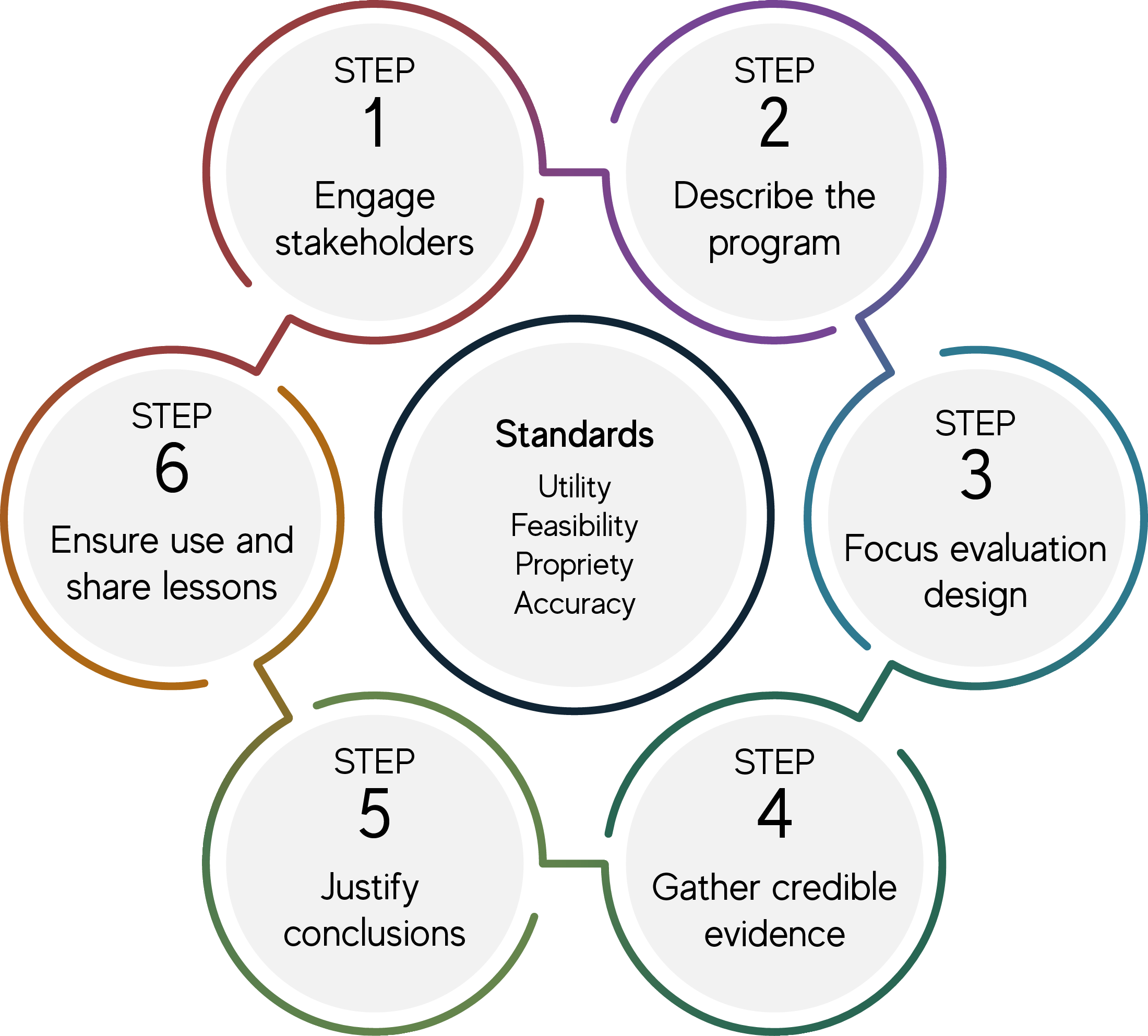
The standards and steps for good evaluation within the CDC evaluation framework
The diagram shows the four standards at the centre of the diagram, with the six evaluation steps forming a circle surrounding the standards. Each step informs the next, in an iterative loop.
-
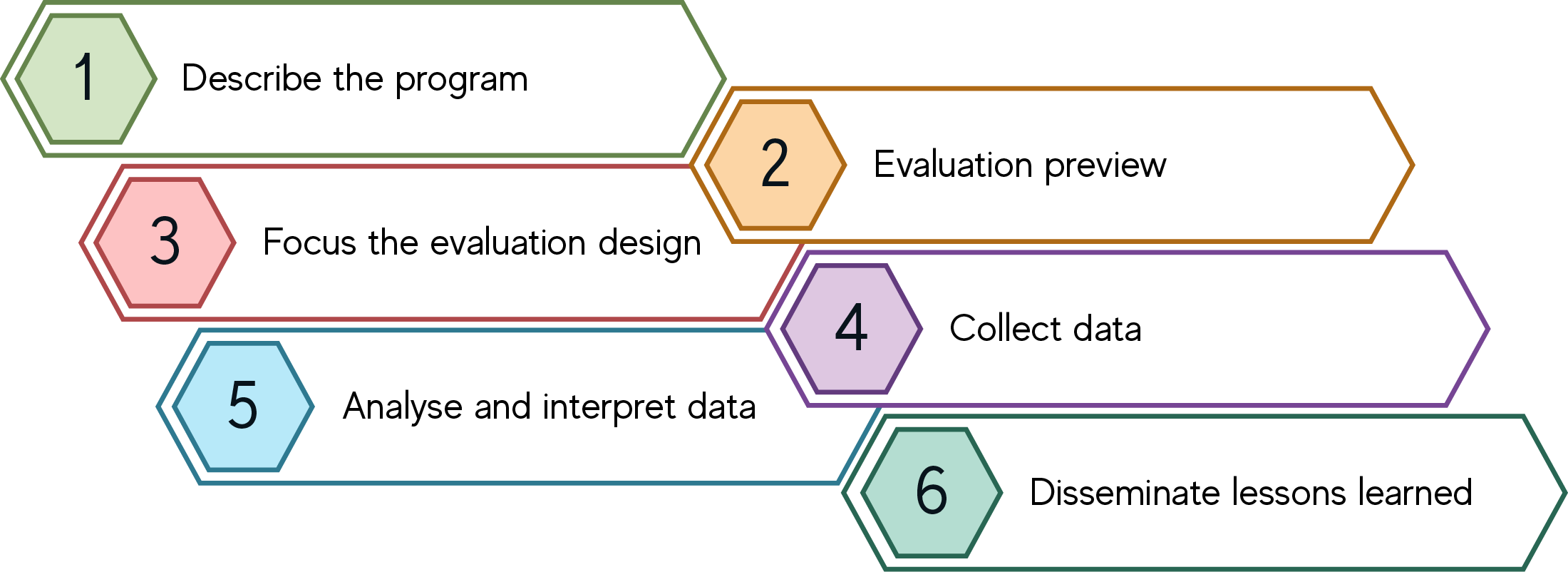
The six-step Prevention and Population Health Branch evaluation framework for health promotion and disease prevention (
The diagram shows the PPHB evaluation framework, with six steps for evaluation, and each progressing into the next, connected by arrows.
-
Benefiting vulnerable and marginalised communities with our evaluation
Shona Crabb provides a general overview of the concept of vulnerable populations and communities, and explains why it is important for evaluators to work with them, and how evaluation, when approached properly, can produce significant benefits.
Benefiting vulnerable and marginalised communities with our evaluation
-
Analysis Perspectives
The interactive graphic below shows different items likely to be included in an economic evaluation at different levels of analysis (international, government - state and local, community, and household) and from different perspectives (individual, health care, single payer, multisector, and societal). Select each perspective to see which items and levels would be most likely to be included in an economic evaluation. Darker shading indicates that that item is more likely to be included.
-
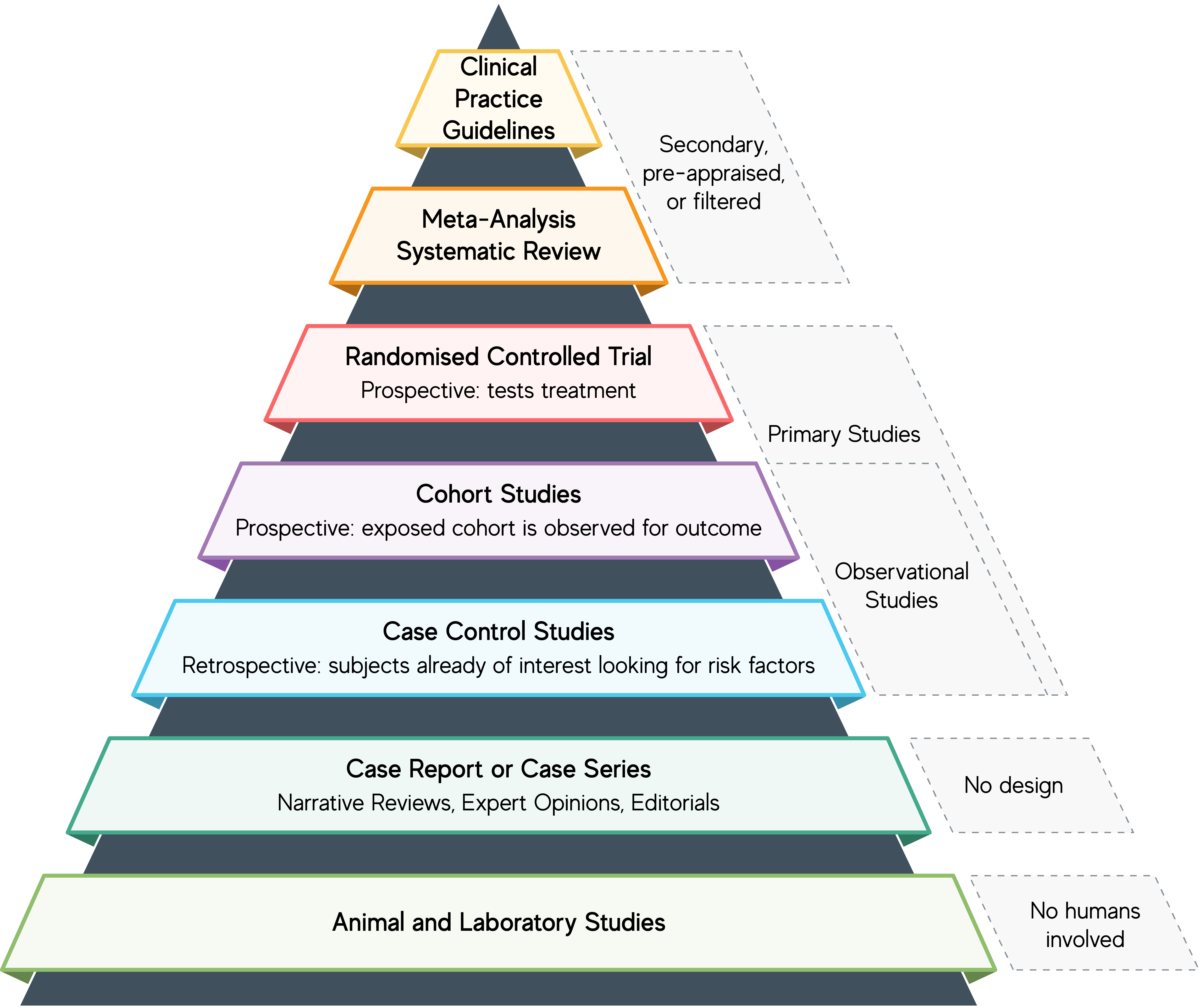
The hierarchy of evidence for research design
The graphic shows a pyramid, with different kinds of research/study designs. The designs are ranked vertically by their quality of evidence, with studies such as randomised controlled trials and systematic reviews ranked higher than items like narrative reviews or editorials.